
Stefan Zweig was an Austrian writer and dramatist, especially known for his psychologically sensitive novellas and biographies.
Zweig poignantly reveals how dangerous ideologies establish themselves gradually as the world becomes numb – a call for vigilance and critical awareness. Stefan Zweig, The World of Yesterday, 1942 "You see: all the monstrosities, like book burnings and pillory festivals, which would become reality just a few months later, were still beyond comprehension for even the most far-sighted people a month after Hitler's rise to power. For National Socialism, with its unscrupulous deception, was careful not to reveal the full radicalism of its aims until the world had been hardened. Thus, they cautiously practiced their method: always just one dose, followed by a short pause. Always just a single pill, then a moment's waiting to see if it hadn't been too strong, if the world's conscience could still tolerate this dose. And since the European conscience—to the detriment and disgrace of our civilization—eagerly emphasized its innocence, because these acts of violence were taking place 'across the border,' the doses became ever stronger until finally all of Europe perished under them. Hitler accomplished nothing more ingenious than this tactic of slow probing and ever-increasing violence against a morally, and soon also militarily, ever-more-devastated world." weakening Europe." Stefan Zweig: "The World of Yesterday. Memoirs of a European."
Translation or original: 🇩🇪Click here
Quelle: Hier klicken
i
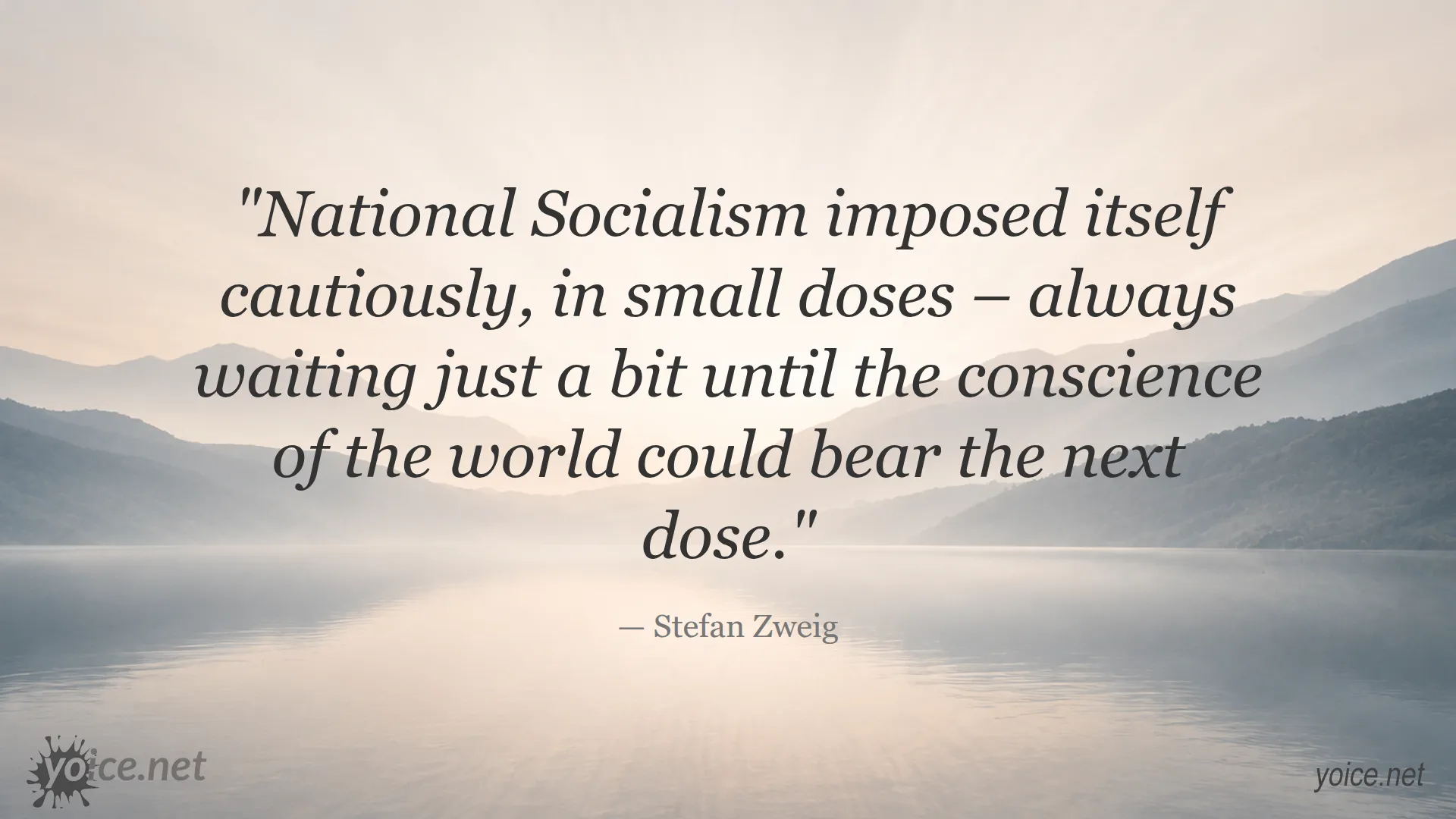
Stefan Zweig (1881–1942) was one of the most famous German-speaking writers of the early 20th century. Born in Vienna, he was known for works dealing with themes such as psychology, history, and the cultural tensions of his time. Due to his Jewish heritage and anti-fascist stance, Zweig left Europe during World War II and committed suicide in Brazil in 1942. His works continue to be highly regarded today.
 Copyright © yoice.net – Quote Artwork
 Copyright © yoice.net – Quote Artwork
 Copyright © yoice.net – Quote Artwork
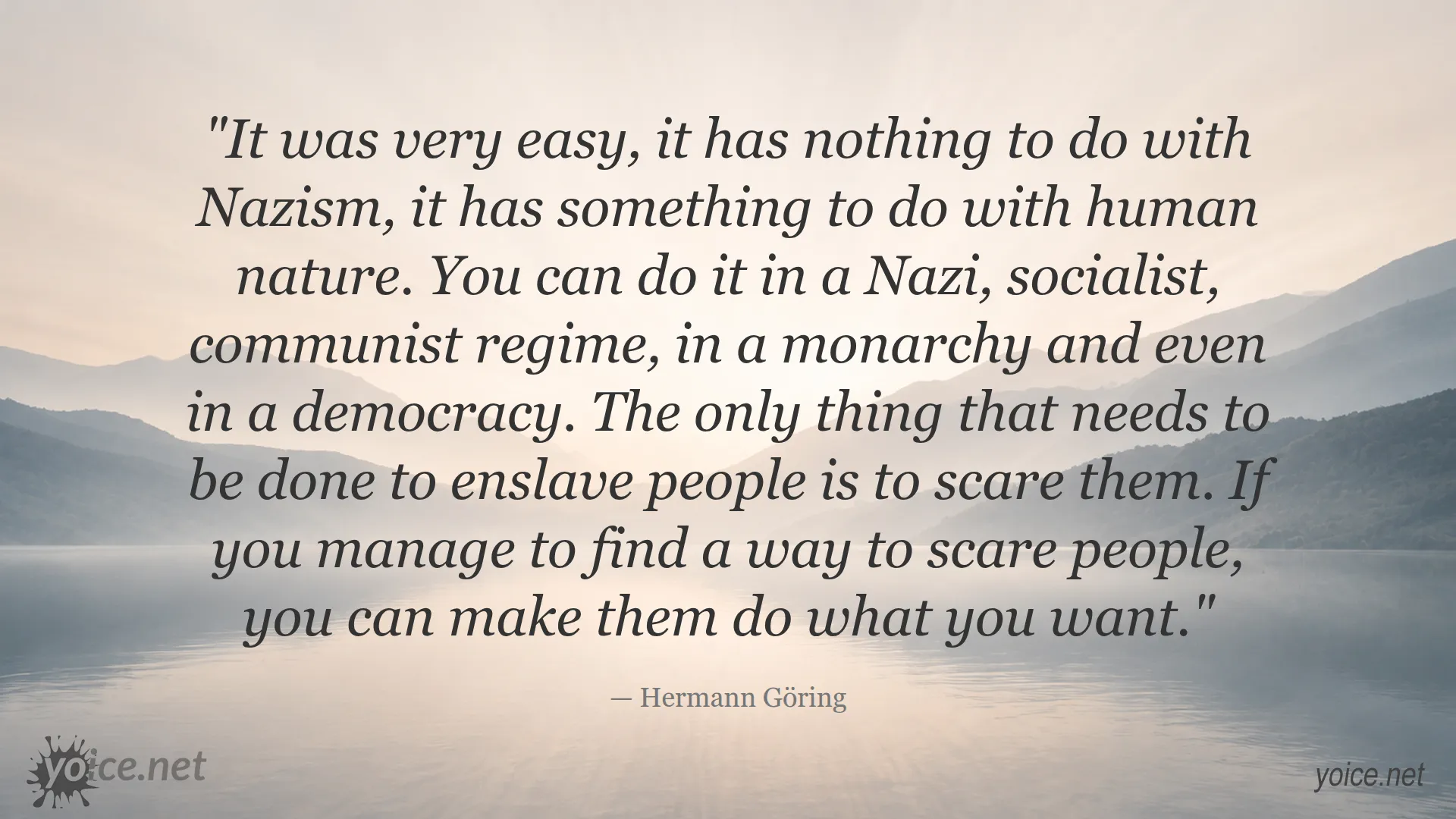 Copyright © yoice.net – Quote Artwork
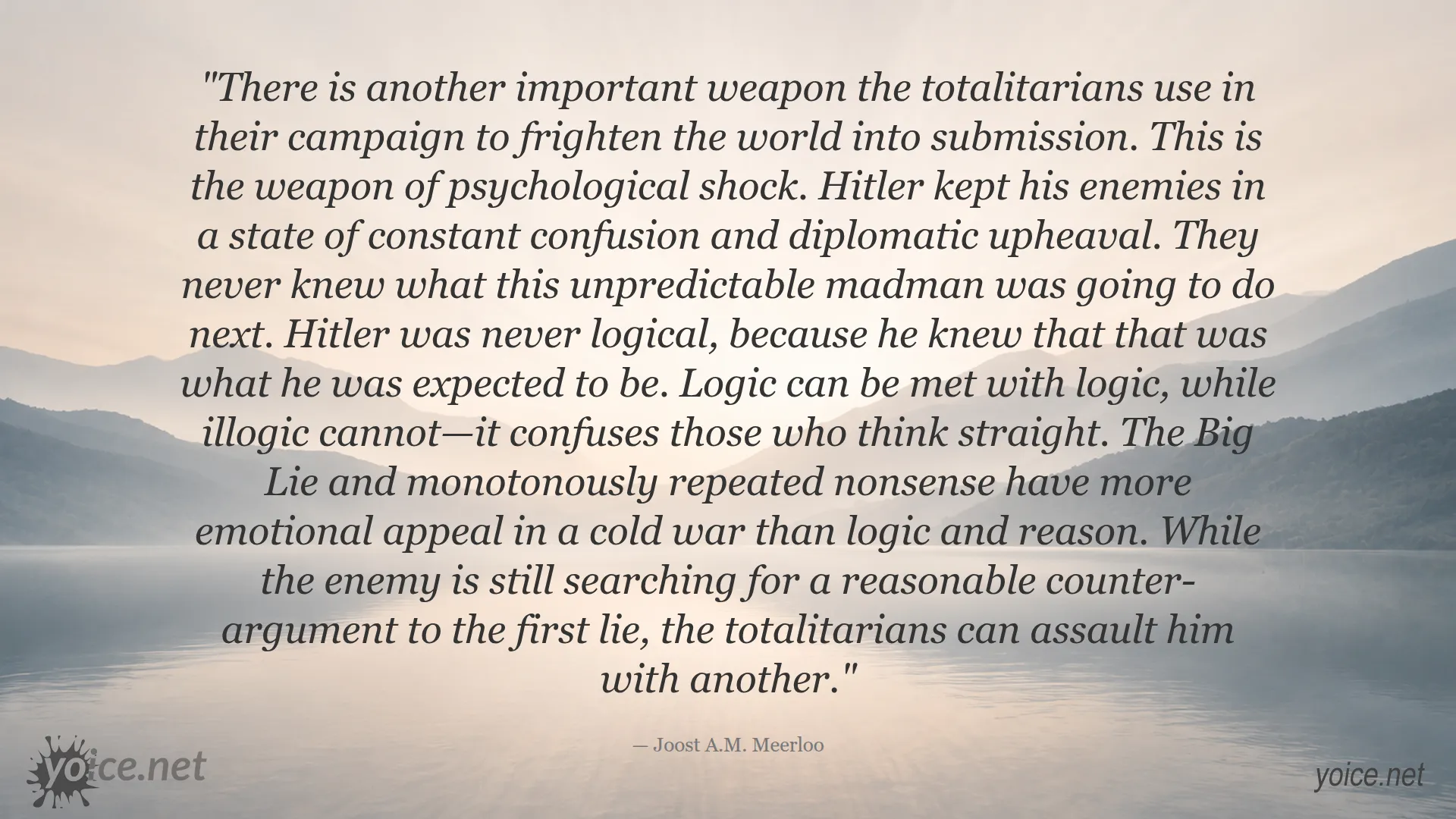 Copyright © yoice.net – Quote Artwork
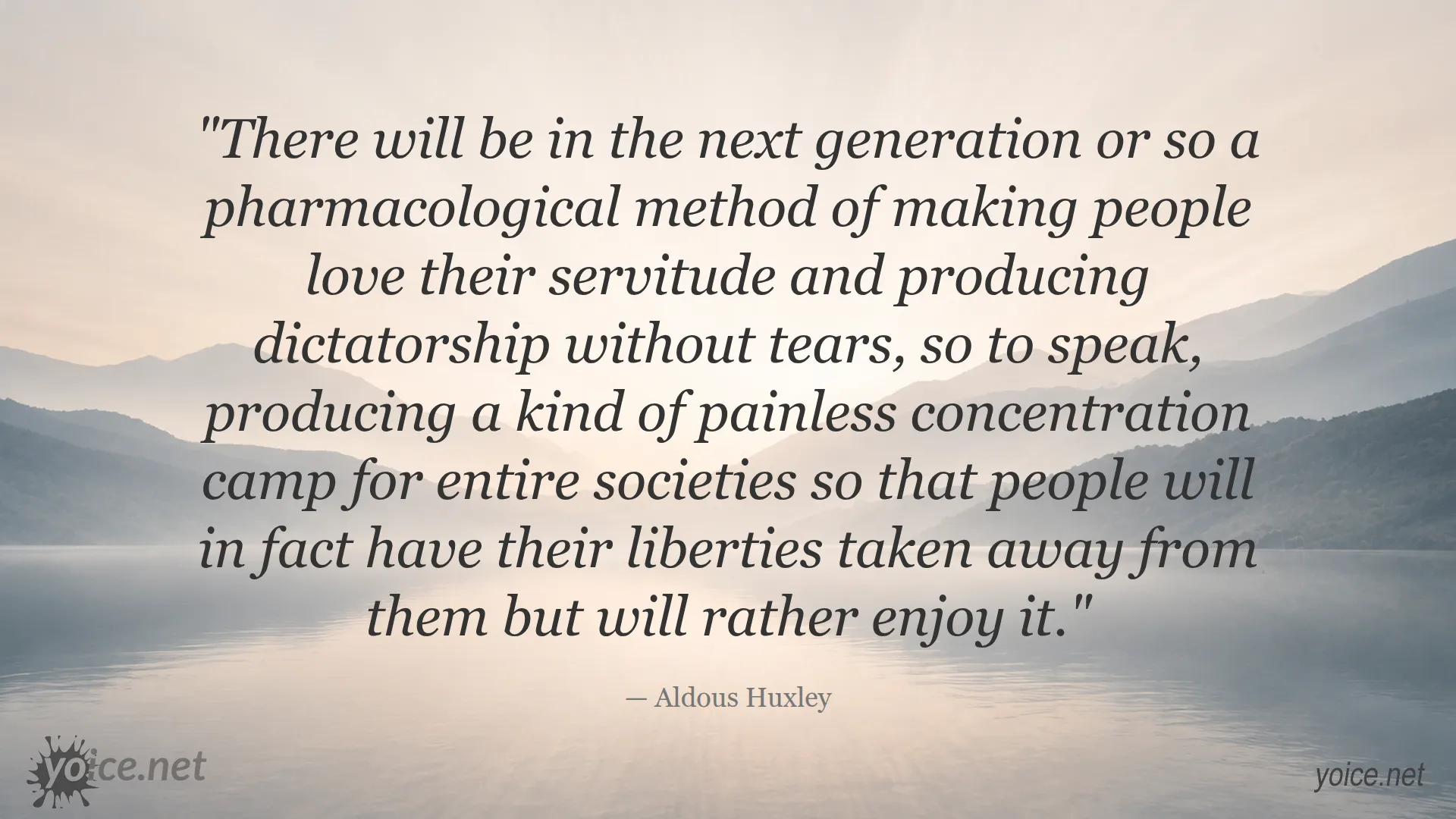 Copyright © yoice.net – Quote Artwork
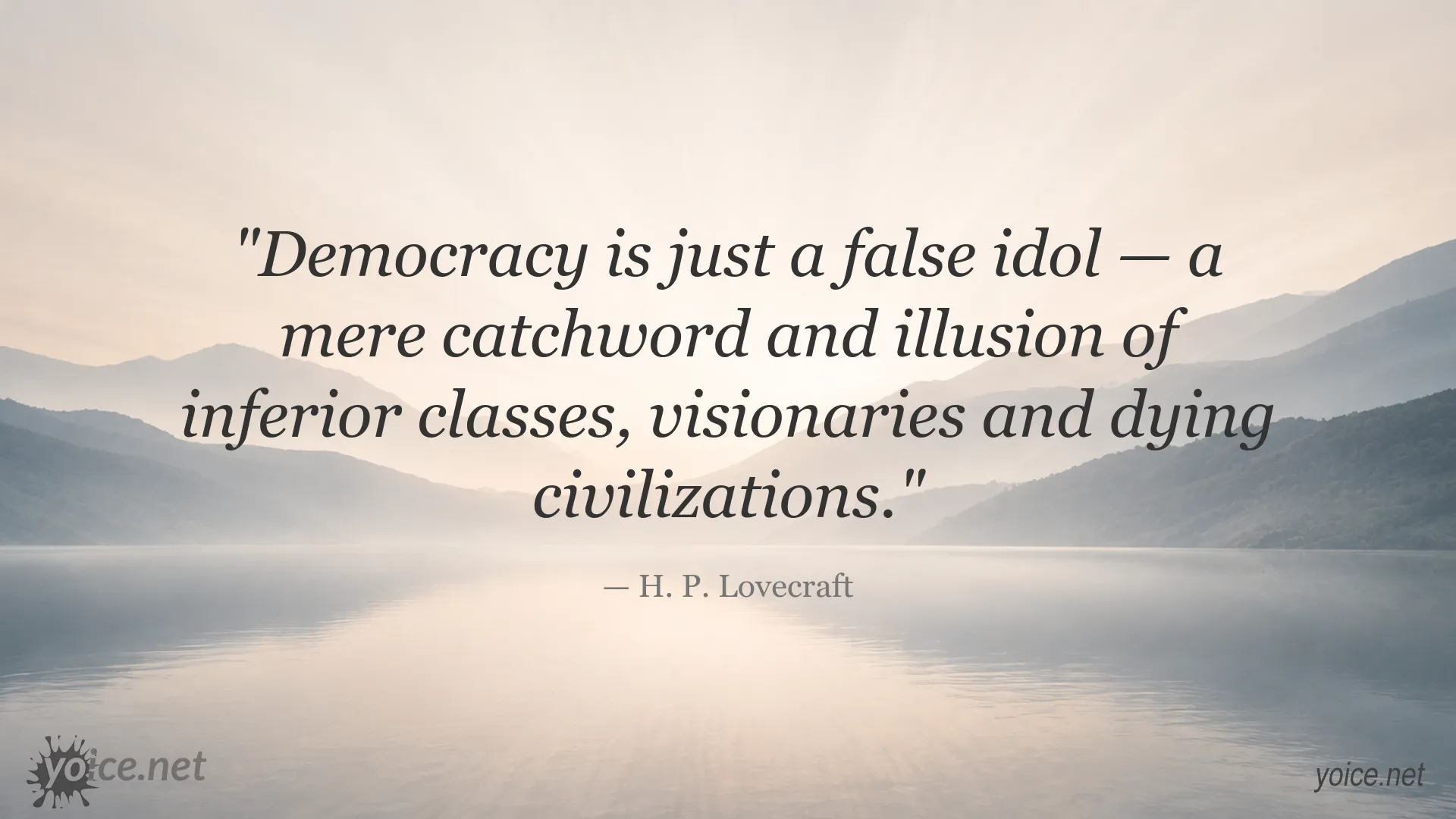 Copyright © yoice.net – Quote Artwork
 Copyright © yoice.net – Quote Artwork
Leave a Reply
Want to join the discussion?Feel free to contribute!